
Frog farming, although not as common as pig or poultry farming, offers comparable economic returns. Therefore, it has become an attractive startup option for many farmers. So, how can farmers achieve high efficiency and maximize profits? What are the proper techniques for commercial frog farming?
Frogs are a popular delicacy with high nutritional value and are widely favored. In rural areas, after rainy days, wild frogs are commonly used in traditional dishes. However, due to the decline in wild frog populations and increasing market demand, more frog farms are being established and expanded. Therefore, mastering effective commercial frog farming techniques is essential for farmers.
I. BASIC BIOLOGICAL CHARACTERISTICS OF FROGS
– Frogs belong to the amphibian class, meaning they can live both in water and on land.
– Their growth and development consist of two stages:
+ The first stage is the tadpole stage, living in water and breathing through gills.
+ The second stage is when tadpoles develop into frogs, living both in water and on land, breathing through lungs and skin.
Therefore, frog farming systems must provide both aquatic and terrestrial environments to ensure optimal adaptation and growth.
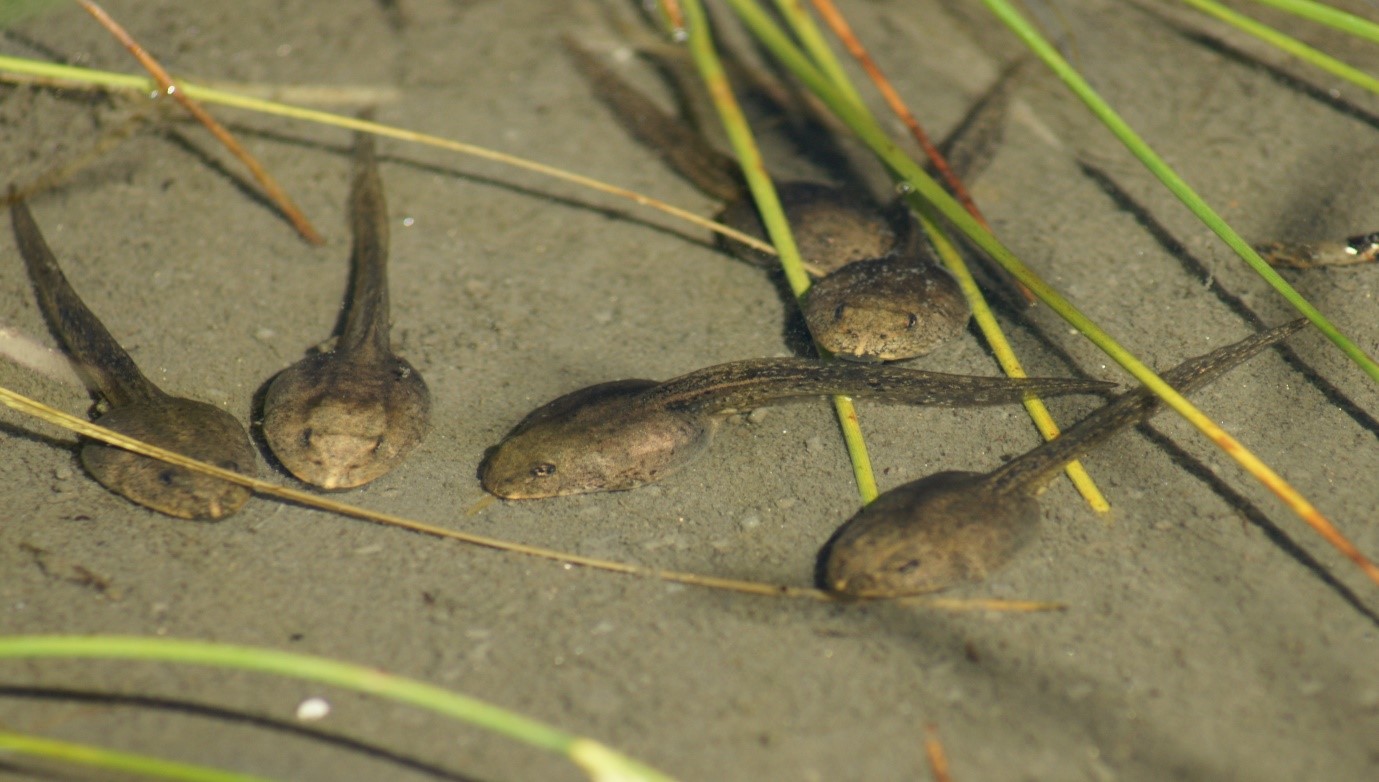 Images of the tadpole stage
II. FROG FARM CONSTRUCTION
1. Concrete or Brick Tanks
– Farmers can utilize vacant garden land to construct frog tanks. Old pig pens can also be renovated into frog tanks. The flooring may be tiled, cemented, or lined with tarpaulin.
– Area: 6–10 m², Wall height: 1.2–1.5 m, Water depth: 20–25 cm. The tanks should be covered with nets to prevent frogs from escaping and to protect them from predators such as cats, rats, birds, and snakes. Netting also helps reduce direct sunlight exposure and excessive heat. During hot days, regular water spraying is recommended to cool the frogs.
– The tank bottom should be slightly sloped toward the drainage outlet for easy water exchange. Floating platforms (made from foam or bamboo) and aquatic plants such as water hyacinth can be added to provide resting and shelter areas.
– Daily water replacement is necessary to maintain hygiene.
– Before stocking frogs, disinfect the tank using A BENZACID 800 at a dosage of 200 ml/m³ of water. After 6–8 hours, drain and rinse with clean water, then allow the tank to dry before refilling.
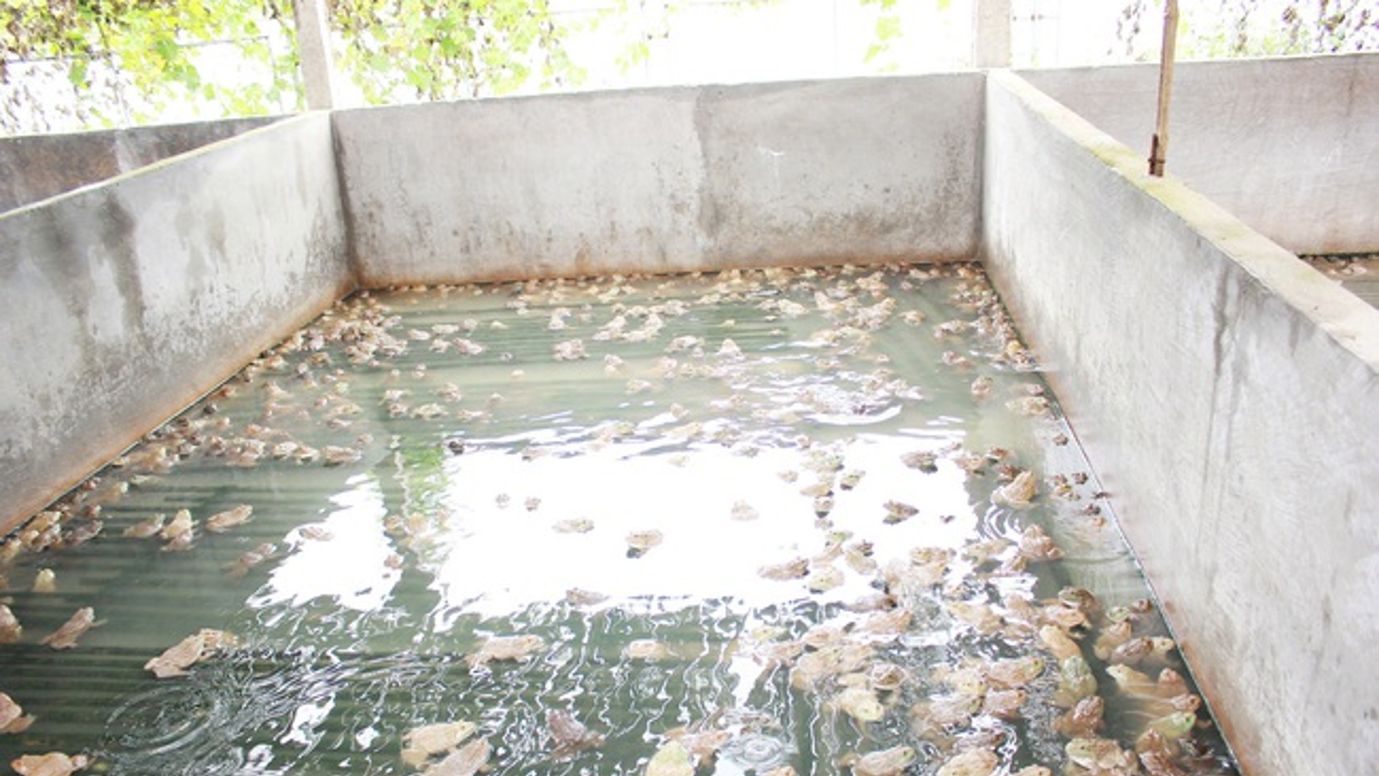 Images of raising frogs in a cement tank
2. Net cages in fish ponds
– Use nylon nets with mesh size of 0.5–1 cm to prevent frog escape and predator intrusion, while allowing waste and leftover feed to fall into the pond for fish consumption.
– Area: 15–20 m², Height: 1.2–1.5 m. Install floating platforms and aquatic plants for resting. Cover the cages to protect frogs from direct sunlight and rain.
– The total net cage area should not exceed 2/3 of the fish pond surface.
– Ensure the pond water is clean, free from contaminants, and equipped with proper inlet and outlet systems.
– Before stocking, disinfect pond water with A BENZACID 800 at a dosage of 1 liter per 1500 m³ of water. Stock frogs after 3–5 days.
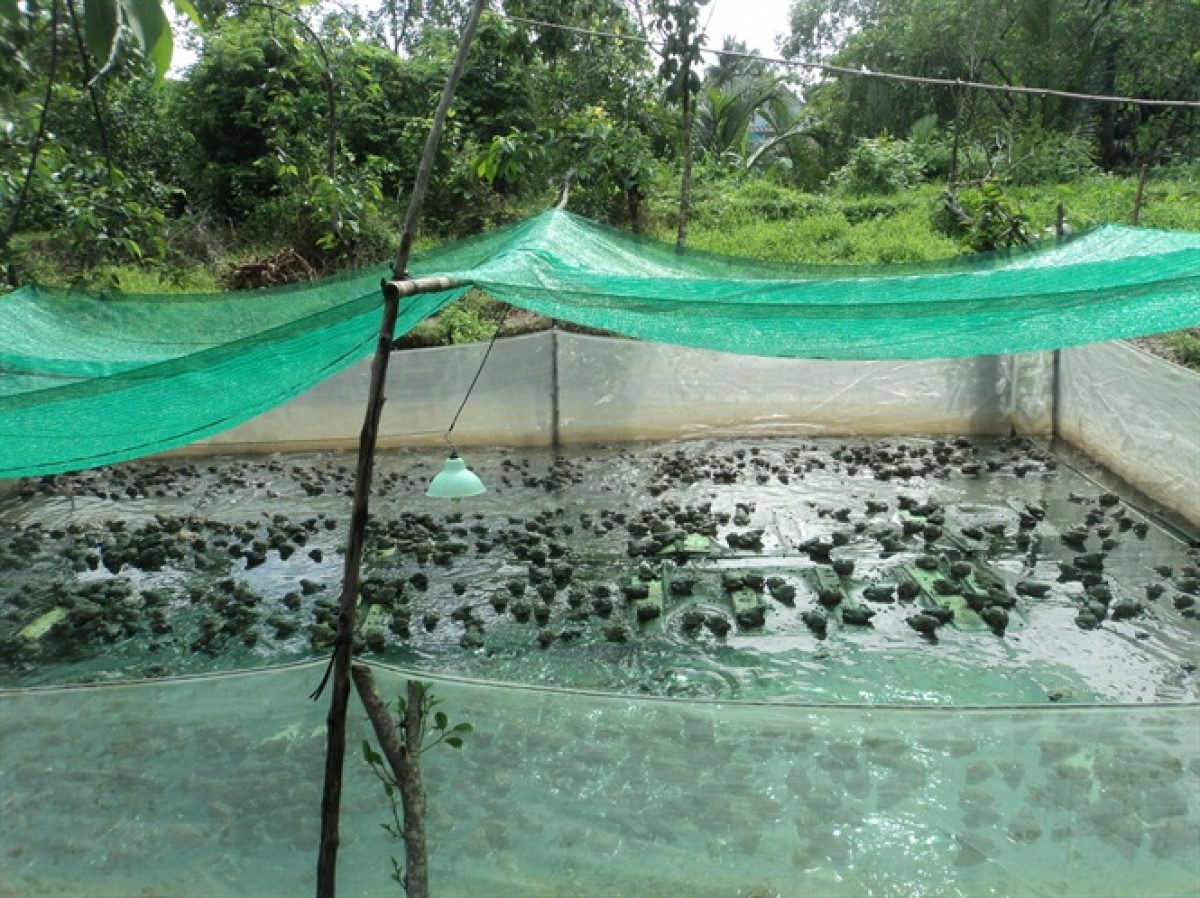 Images of frog farming using net tanks
III. SELECTION OF FINGERLINGS AND STOCKING DENSITY
1. Frog Selection
– Select healthy frogs with uniform size, good activity, and no deformities. Stock frogs during cool periods (morning or late afternoon) when temperatures are below 30°C.
– Before stocking, bathe frogs in 3% saline solution for 10–15 minutes to eliminate parasites and pathogens. Remove any dead individuals immediately.
– Due to their competitive feeding behavior, frogs tend to show size variation. After 7–10 days, if size differences appear, sort and separate frogs by size to prevent cannibalism and reduce mortality.
2. Stocking Density
– Commercial frogs can be harvested after 2.5–3 months. Therefore, stocking density should be adjusted according to growth stages:
– Month 1: 150–200 frogs/m²
– Month 2: 100–150 frogs/m²
– Month 3: 80–100 frogs/m²
Regular grading is necessary to minimize size differences and prevent larger frogs from preying on smaller ones.
IV. FEEDING MANAGEMENT
– Commercial frogs are fed entirely with industrial feed.
+ Floating pellets with protein content ranging from 20–40%. Pellet size should match frog age. Fish feed can be used as a substitute if frog feed is unavailable
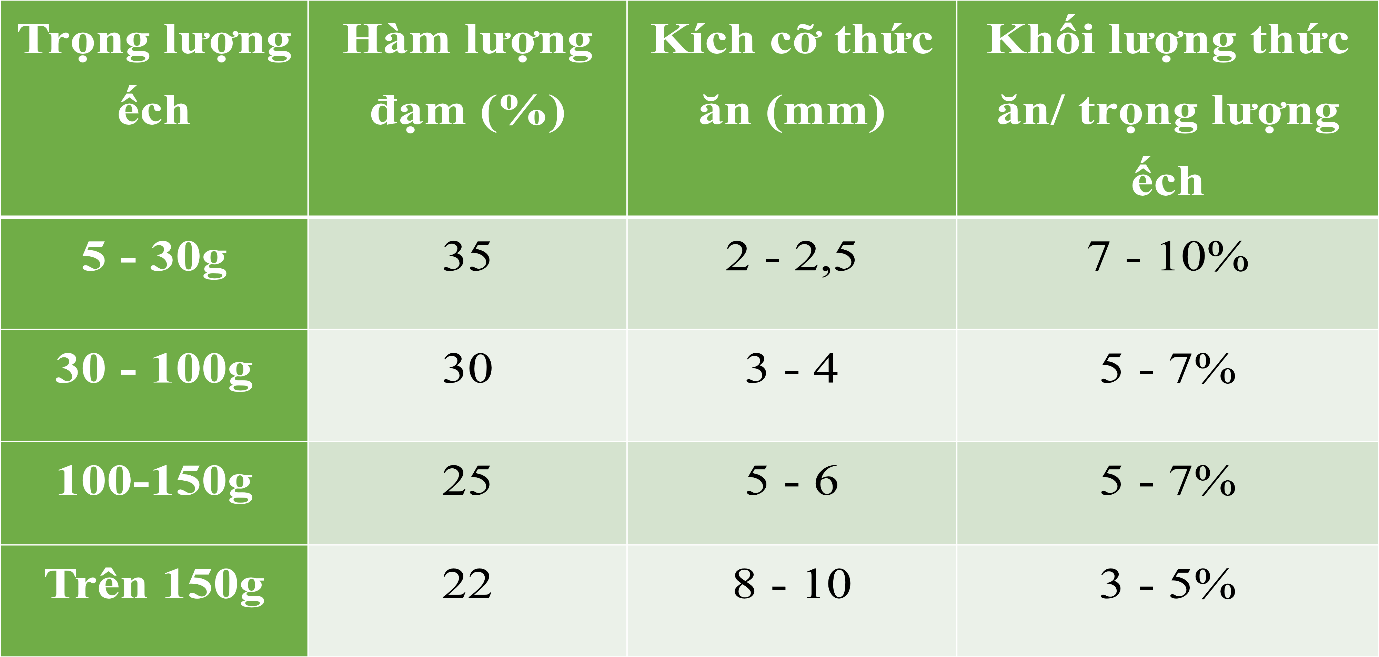 Size and weight chart for frog feed
– Due to strong feeding competition, feed should be distributed evenly to ensure all frogs have access. Monitor daily feed intake and adjust accordingly to prevent underfeeding, which can lead to cannibalism.
– Feeding frequency: 3–4 times/day initially, Reduce to 2–3 times/day in the second month. Frogs eat less during daytime, so increase feeding in the evening. Feed changes must be gradual to avoid digestive disorders such as diarrhea or feed refusal.
– Supplement periodically with A VITAMIN C MAX and probiotics A–LACTOBACILLUS to help improve immunity and digestion.
V. HARVESTING
After 2.5–3 months, frogs reach a market weight of approximately 200–250 g and can be harvested. Stop feeding at least 12 hours before harvesting.
Applying these commercial frog farming techniques will help farmers improve productivity, achieve better success, and increase profitability.