
In waterfowl production, viral diseases are always a major concern for farmers due to their extremely rapid spread and high mortality rates. Among them, viral hepatitis in ducks is considered one of the most dangerous diseases affecting ducklings.
Viral hepatitis is an acute infectious disease commonly occurring in ducks under 6 weeks of age, directly affecting the liver and nervous system. Due to its rapid transmission and high mortality rate, proactive disease prevention plays a decisive role in the economic efficiency of the production cycle.
1. SUSCEPTIBLE SPECIES & TRANSMISSION ROUTES
Viral hepatitis in ducks is caused by Duck Hepatitis Virus (DHV). The disease occurs in ducks, Muscovy ducks, and geese from 1 day to 6 weeks of age. It is particularly severe in ducklings aged 1–3 weeks, with mortality rates ranging from 80–95%, and in some cases reaching 100%.
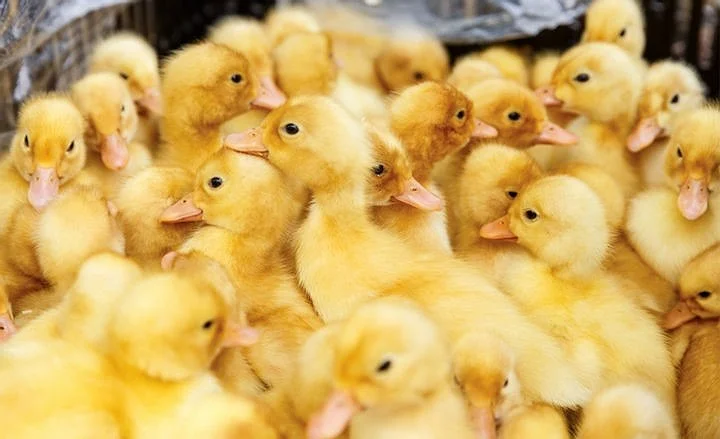 Image of duck farming
The disease is transmitted primarily through the digestive and respiratory routes, through contact with contaminated feces, nasal secretions, feed, and drinking water.
1. CLINICAL SIGNS & LESIONS
– Ducks become anorexic, depressed, and huddle together.
– After several hours, ducks may develop severe convulsions, fall onto their sides, lie on their backs, and extend their legs and necks.
– The head may be twisted backward or to one side, producing the characteristic opisthotonus posture.
– Mortality may reach 70–90% if the disease is not controlled promptly. The disease is particularly dangerous due to its high mortality rate and rapid spread.
 Image of duck farming
At lesions:
– The liver is enlarged, soft, and friable.
– Multiple hemorrhagic and necrotic foci are present on the liver surface.
– Ascitic fluid may also be present in the abdominal cavity.
Note: Duck viral hepatitis is caused by a virus; therefore, antibiotics cannot eliminate the virus. Antibiotics are only used to help control or prevent secondary bacterial infections.
 Image of duck farming
3. DISEASE PREVENTION
For effective disease prevention, farmers should:
– Administer vaccines fully and according to the recommended vaccination schedule.
– Keep housing facilities clean and dry. Regularly disinfect the poultry house and surrounding environment. Ensure that drinking water and feed are from clean and hygienic sources.
– Supplement electrolytes, vitamin C, and hepatoprotective supplements to support the resistance.
– Immediately isolate ones showing clinical signs of disease.
Although viral hepatitis in ducks is highly dangerous and spreads rapidly, it can be effectively controlled through proactive preventive measures. Following the appropriate vaccination schedule and maintaining strict biosecurity and hygiene practices are the foundation for protecting the flock and minimizing production risks.