In recent years, numerous administrative procedures and business conditions in livestock production and veterinary services have been abolished, decentralized, delegated, reduced, and simplified.
On September 11, in Ho Chi Minh City, the Department of Livestock Production and Veterinary Medicine held a conference on “Dissemination of Regulations on the Management and Use of Antibiotics in Livestock Production and Aquaculture, and Guidance on Self-Declaration of Information on Animal Feed Products.”
The conference program included an introduction to state regulations on veterinary medicines; an overview of key new provisions in the draft Circular on veterinary medicine management; regulations on the use of antibiotics in livestock production and aquaculture; and several important notes on the self-declaration of information on animal feed products.
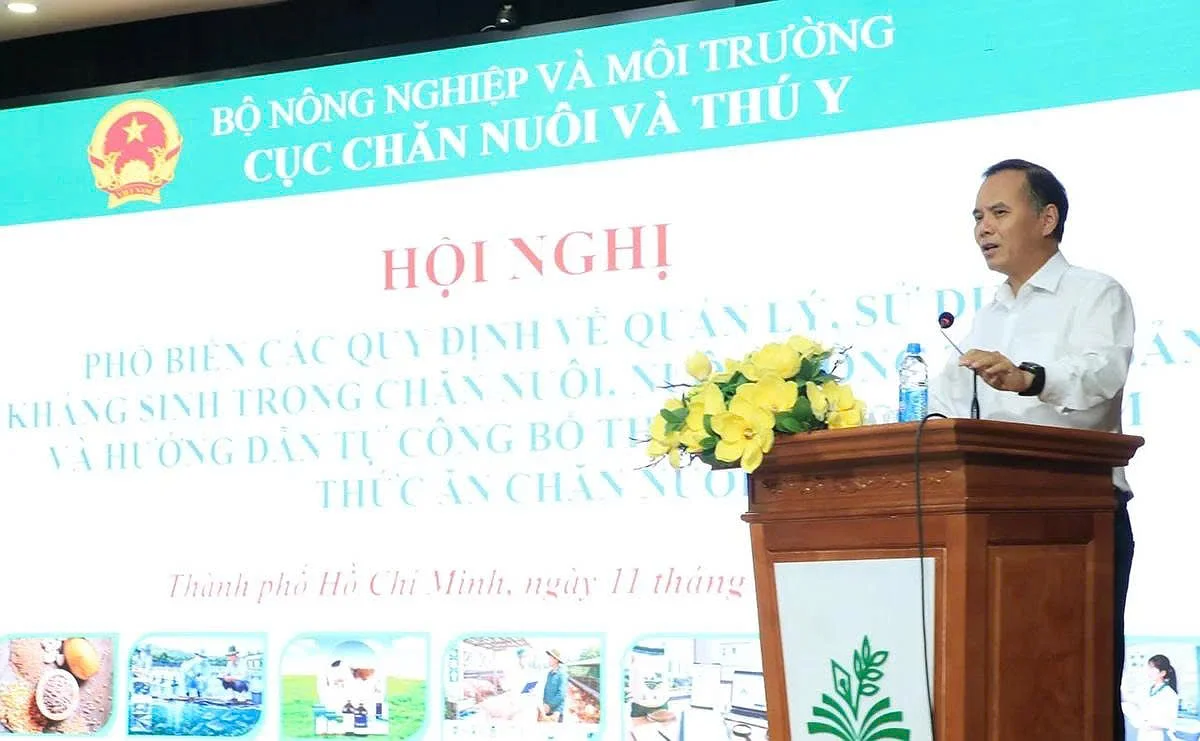 Mr. Pham Kim Dang, Deputy Director General of the Department of Livestock Production and Veterinary Medicine, delivers the opening remarks at the conference. Photo: Son Trang.
In his opening remarks at the conference, Mr. Pham Kim Dang, Deputy Director General of the Department of Livestock Production and Veterinary Medicine, said that in response to the requirements of national development in the new era, the Politburo has issued a number of important resolutions.
Among them are four key resolutions aimed at promoting innovation and breakthrough reforms, including Resolution No. 57 on breakthrough development in science and technology, innovation, and digital transformation; Resolution No. 59 on “International Integration in the New Situation”; Resolution No. 66 on reforming the development and enforcement of laws to meet the requirements of national development in the new era; and Resolution No. 68 on the development of the private sector.
Together with other units under the Ministry of Agriculture and Environment, the Department of Livestock Production and Veterinary Medicine has actively reviewed and reported to the Ministry and competent authorities on measures to abolish, decentralize, delegate authority, reduce business conditions, and simplify administrative procedures, thereby helping remove a number of bottlenecks in the livestock and veterinary sectors, including animal feed and veterinary medicines.
As a result, the number of administrative procedures has been reduced from 97 (53 procedures implemented at the ministerial level and 44 at the local level) to 79 procedures (29 implemented at the ministerial level and 50 at the local level).
Regarding the reduction of business and production conditions, five conditional business sectors have been abolished, along with nearly 30% of unnecessary investment and business conditions.
Regarding digital transformation: Currently, 85.35% of administrative procedure applications are received and processed through the National Single Window system and the sector’s Administrative Procedure Information System. One hundred percent of administrative procedure results are digitized and delivered electronically.
Of the 29 administrative procedures currently handled at the ministerial level, 15 are eligible for fully online public services, while 14 are eligible for partially online public services.
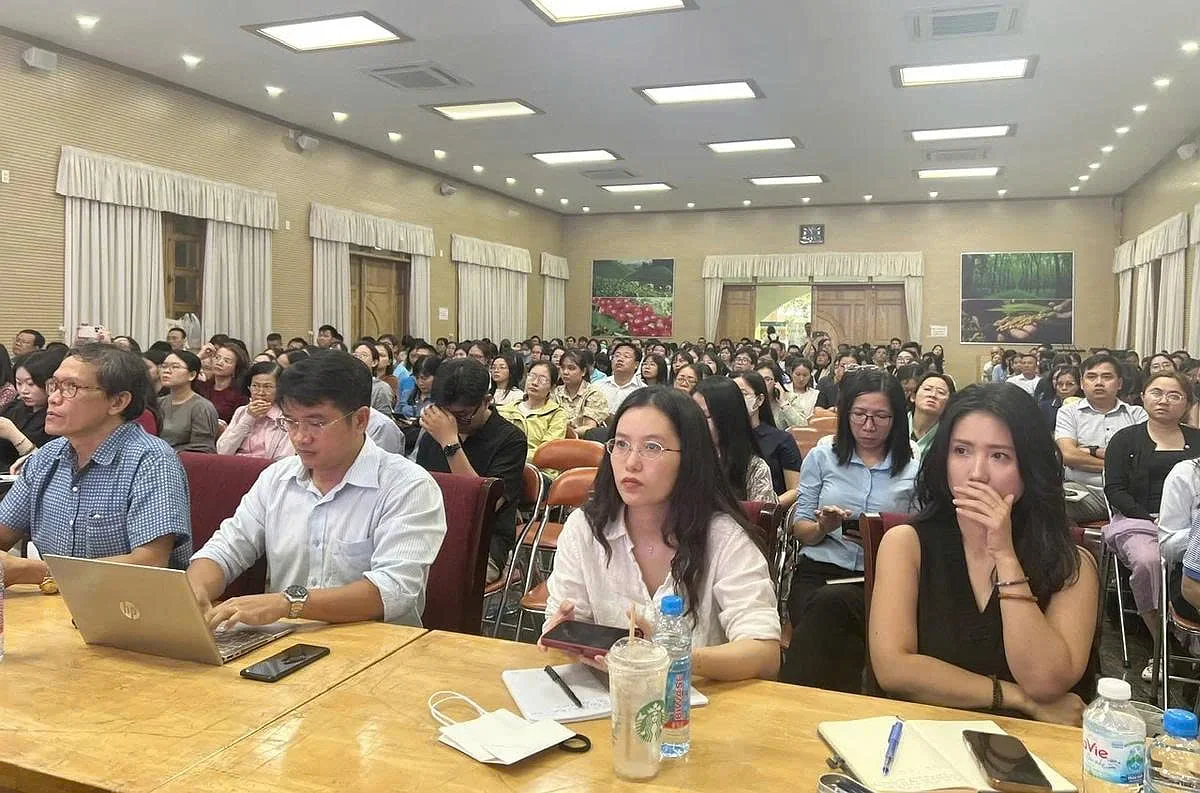 The conference attracted considerable interest from numerous businesses operating in the livestock and veterinary sectors. Photo: Son Trang.
Regarding animal feed, there are now only four administrative procedures, all of which have been fully decentralized to local authorities. The Department of Livestock Production and Veterinary Medicine is responsible only for issuing Certificates of Eligibility for Animal Feed Production at the request of importing countries. The process has been fully shifted from an appraisal-based mechanism for information disclosure to a self-declaration mechanism for animal feed information.
Regarding veterinary medicines, 33 out of 110 conditions have been abolished; the requirement for conformity declaration has been removed; three administrative procedures have been abolished and 12 have been simplified; and 15 administrative procedures have been decentralized to local authorities.
Mr. Pham Kim Dang emphasized that the successful implementation of these administrative reforms by the Department of Livestock Production and Veterinary Medicine has first and foremost depended on the efforts of its officials and staff, the support of local authorities, and, in particular, the cooperation and consensus of organizations, businesses, and citizens. The Department of Livestock Production and Veterinary Medicine hopes to continue receiving such cooperation in the coming period to promote the development of the sector in a professional, responsible, transparent, and sustainable direction.
The conference, “Dissemination of Regulations on the Management and Use of Antibiotics in Livestock Production and Aquaculture, and Guidance on Self-Declaration of Information on Animal Feed Products,” attracted a large number of businesses registering and participating both in person and online. This demonstrates the strong interest of the business community in, and its expectations for, administrative reform in the livestock and veterinary sectors.
Son Trang