
Black soldier fly farming is becoming a prominent trend in modern livestock production thanks to its superior protein supply and efficient waste management capabilities. This is a practical solution to help farmers solve the input cost equation.
In the context of rising animal feed prices, finding nutritious and cost-effective alternative raw materials is the key to success for livestock farmers. The black soldier fly is the optimal solution to help maximize profits and enhance sustainable economic efficiency.
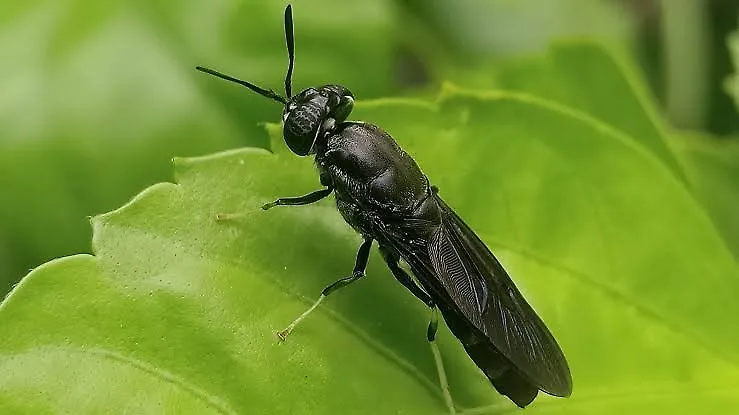 Image of black soldier fly
1. OVERVIEW OF THE BLACK SOLDIER FLY
The black soldier fly is an insect considered a natural renewable resource used for animal feed and aquaculture. With a short life cycle (40–45 days), high reproductive capacity (500–1,200 eggs/female fly), and no transmission of diseases to humans, it is considered a beneficial insect. Black soldier fly larvae have been used as a source of protein and fatty acids, especially lauric acid, for livestock and fish.
The black soldier fly originates from the warm tropical and temperate regions of the American continents and other continents such as Europe, Asia, and Australia. Currently, this species is present on almost 80% of the world’s continents between latitudes 46°N and 42°S. In our country, it can develop in almost all ecological zones. Unlike the housefly (Musca domestica), the black soldier fly is a beneficial insect and harmless to humans and the environment.
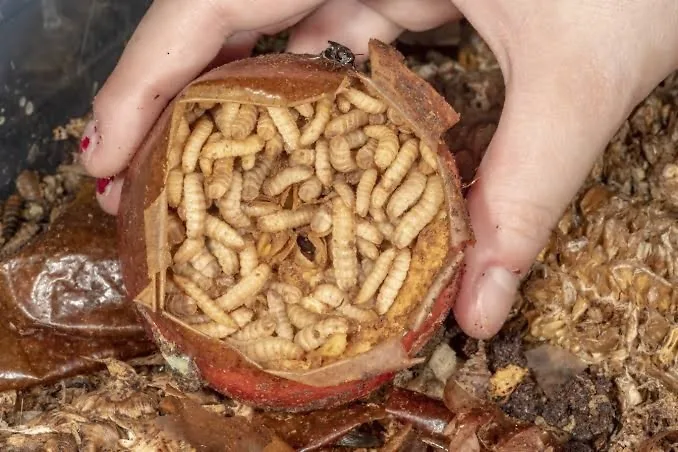 Image of black soldier fly
2. DEVELOPMENTAL LIFE CYCLE
It is divided into 4 stages:
Egg stage: After 3–4 days, eggs hatch into larvae. The larvae are milky white or slightly yellowish-white.
Larval stage: After 15–18 days developing into pupae, the pupae turn dark brown and then black.
Pupal stage: About 10–15 days later, pupae develop into adult flies.
Adult fly stage: They have a lifespan of 5–12 days; during this life cycle, they mate, lay eggs, and die.
3. BENEFITS OF THE BLACK SOLDIER FLY
High nutritional value: The larvae are rich in protein (45–55%), fat (15–30%), Calcium (2.5–5%), Phosphorus (1–1.5%), with all essential amino acids fully present, especially high or comparable levels of lysine (3.1–3.2%) and methionine (1.7–1.8%) relative to fishmeal.
Enhanced disease resistance: The high lauric acid content in fat has antibacterial properties, helping livestock boost their immune resistance.
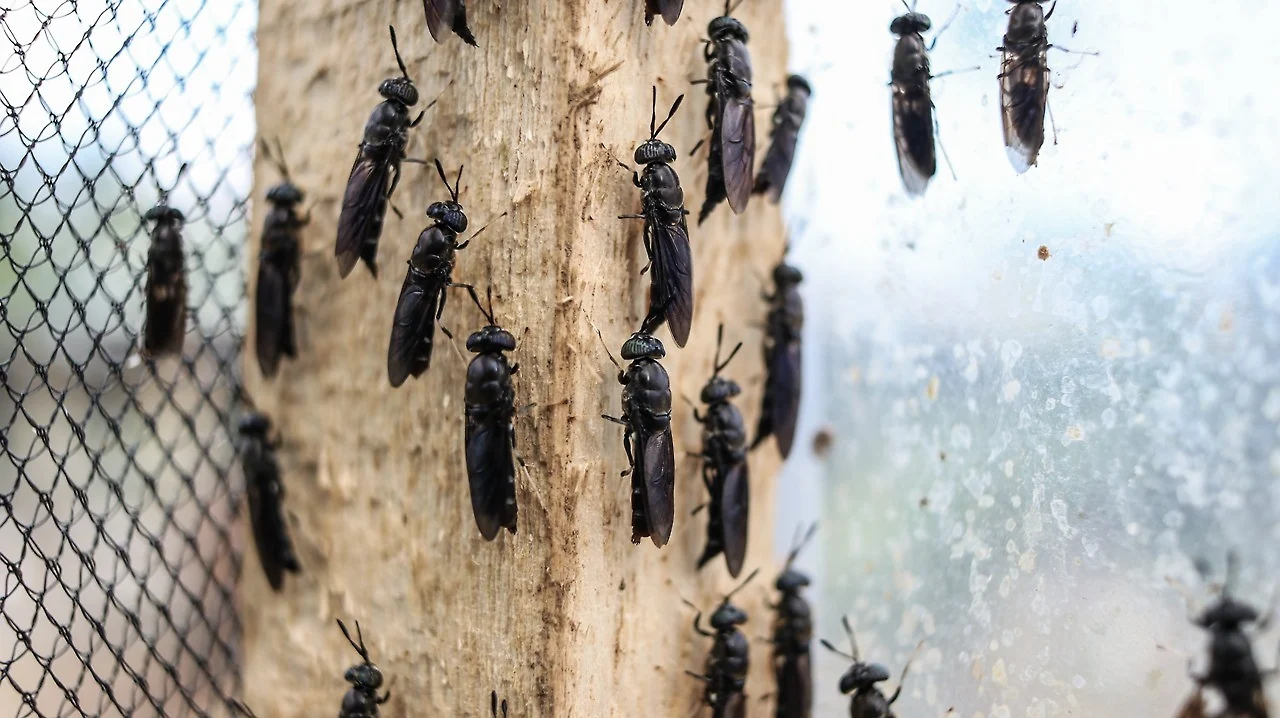 Image of black soldier fly
Alternative traditional feed: Larvae are currently used by many livestock households to replace feed products for poultry and livestock such as fishmeal and soybean meal, and to replace fishmeal in diets for various marine and freshwater fish species such as catfish, rainbow trout, etc.
Cost savings: Especially, the breeding cost is very cheap; farmers can utilize unused pig pens as a container for fly larvae. Feed costs for them are also very low, as they can consume and decompose all organic products; farmers can utilize spoiled vegetables, melons, fruits, or feed them soybean residue and corn meal, which are all very good without high costs.
Amidst rising animal feed prices, the black soldier fly is an extremely beneficial insect that helps farmers maximize costs, increase profits, and improve livestock production efficiency.